



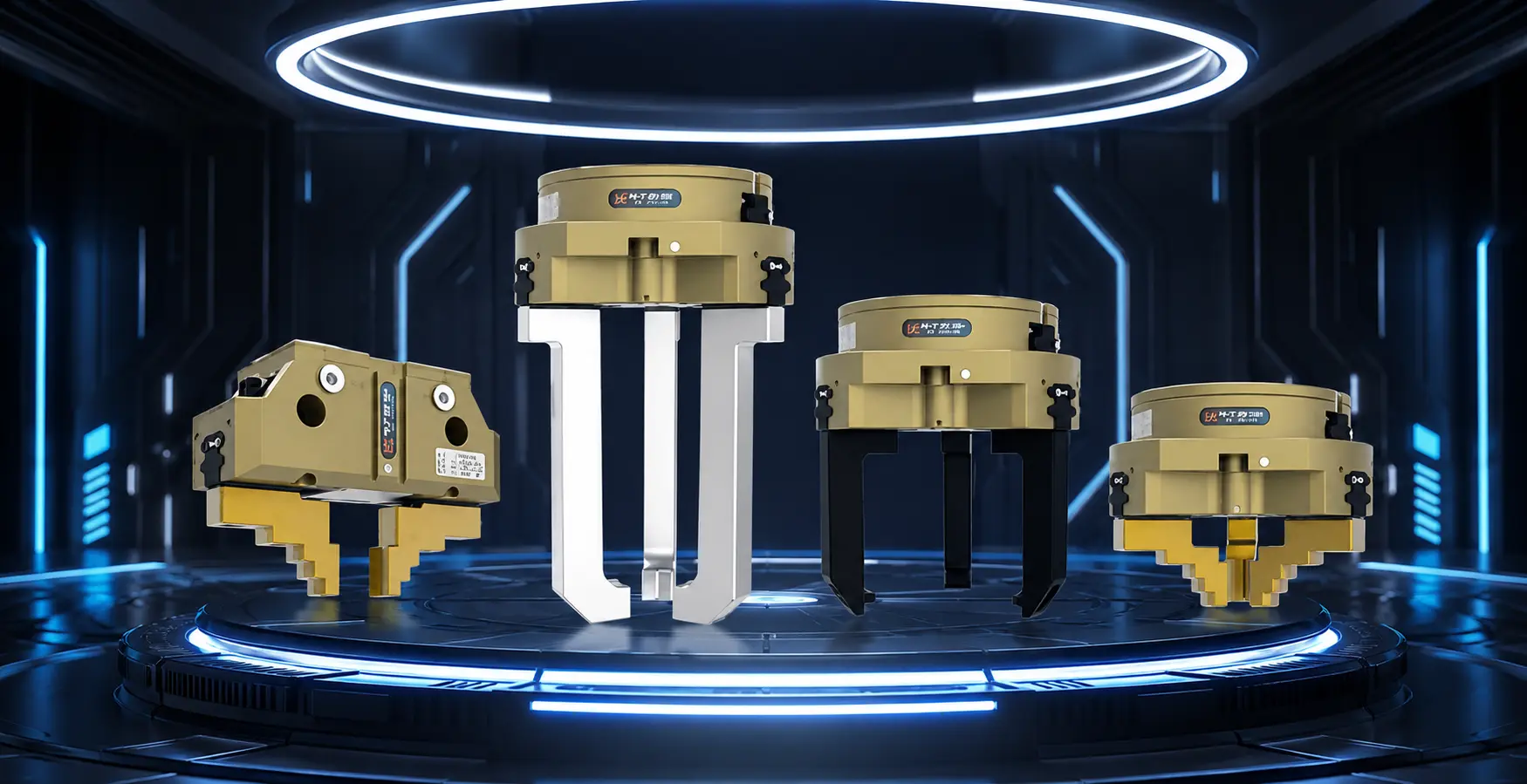
When selecting an industrial robot gripper, engineers should evaluate more than just price.
1. Gripping Force and Stroke
The gripper must provide sufficient gripping force without damaging the product.
Key considerations include:
For delicate components, adjustable gripping force is essential.
2. Speed and Repeatability
In high-volume production environments, even small improvements in cycle time can significantly increase output.
High-quality robotic grippers typically offer:
Some industrial pneumatic grippers can achieve repeatability as high as ±0.02 mm.
3. Operating Environment
The application environment greatly affects gripper lifespan and reliability.
Consider whether the gripper will operate in:
IP-rated sealing protection helps improve durability in harsh industrial environments.
4. Integration and Compatibility
A modern pneumatic robot gripper should integrate easily with existing automation systems.
Important compatibility factors include:
Many manufacturers now combine robotic grippers with automatic tool changers to create flexible production systems capable of rapid EOAT switching.
Industrial robot grippers are widely used across many industries.
Automotive Manufacturing
Used for:
Robotic grippers improve consistency and reduce labor intensity in automotive production.
3C Electronics Industry
Electronics manufacturing requires:
Electric and precision pneumatic grippers are commonly used for handling delicate electronic components.
Packaging and Palletizing
Vacuum grippers are widely used for:
Their high speed makes them ideal for automated packaging systems.
CNC Machine Tending
Mechanical grippers help automate loading and unloading operations for CNC machines, significantly reducing manual labor and increasing spindle utilization.
The next generation of pneumatic robot gripper systems is becoming increasingly intelligent.
Modern robotic EOAT solutions now integrate:
Smart grippers can detect:
This allows robotic systems to automatically adjust gripping parameters without human intervention, improving production stability and reducing defects.
What is a pneumatic robot gripper?
A pneumatic robot gripper is an end-of-arm tooling device mounted on a robotic arm to grasp, move, and release products during automated handling processes.
What is the difference between pneumatic and electric grippers?
Pneumatic grippers use compressed air for fast and powerful gripping, while electric grippers use motors for precise force and position control.
Which robot gripper is best for fragile products?
Electric grippers or soft gripping systems are typically better for fragile products because they allow accurate force adjustment.
How do I choose the right industrial robot gripper?
You should evaluate:
Choosing the right pneumatic robot gripper is essential for maximizing automation efficiency, reducing downtime, and improving product quality.
As smart manufacturing continues to evolve, modern robotic grippers are becoming more intelligent, flexible, and application-specific. Manufacturers that invest in advanced EOAT and robotic gripping technologies can achieve faster ROI, improved productivity, and stronger long-term competitiveness.
Looking for a reliable pneumatic robot gripper solution for your automation project? Explore LH-TC’s advanced robotic grippers and EOAT systems to build a more efficient and flexible production line.


In high-end automation scenarios such as automotive manufacturing, EV batt…

In heavy-duty material handling and welding applications, the consequences…

In modern manufacturing, reliable workpiece handling is essential for main…

A jaw parallel gripper is a widely used pneumatic gripping device designed…

A 2 jaw pneumatic gripper is a compact and reliable end-of-arm tooling sol…
+86 19137105901
Chat online




 Language